StephSwainston.co.uk

The official site of author Steph Swainston

Once were hunters

Submitted by steph on 13 March 2010 - 4:37pm.


There is a opinion piece in this month's Sci Fi Now magazine, on how I was brought up hunting, rebelled against it, and how this experience influenced Above the Snowline.

Tags:

Above the Snowline

Submitted by steph on 25 February 2010 - 9:28pm.


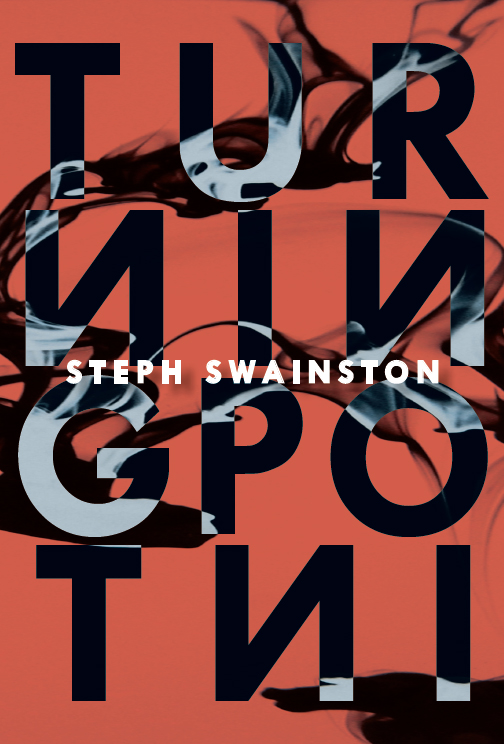
Above the Snowline is out today and here is the cover:


This is what you'll get if you order the book, regardless of the pictures showing on Amazon and everywhere else on the net. This is the final cover, it's a very beautiful production indeed. Order yours now! Order more for your friends, family and pet wolves.

Tags:

E-books

Submitted by steph on 13 December 2009 - 11:35am.


All the Castle books are now available as e-books in a variety of formats.

They are widely available, including from the following stores: Amazon if you’re a Kindle reader, Ebooks.com which has .pdf's, Mobipocket, Palm, Fictionwise.com, and Powell's.

Tags:

The Castle Omnibus

Submitted by steph on 12 December 2009 - 8:31pm.


The Castle Omnibus will be published this week and is available from Amazon.

It is a very handsome volume comprising the three Castle books already published: The Year of Our War, No Present Like Time and The Modern World. It’s got a very striking cover and is beautifully produced.


The next book, Above the Snowline, is completed and will be published in January. It has a better cover than the one currently showing on Amazon. More soon...

Tags:

The ammonite on my windowsill

Submitted by steph on 15 August 2009 - 5:46pm.


Our Liparoceras was a happy ammonite that swam in the tropical sea of early Jurassic Birmingham 200 million years ago. It bobbed along upright in its shell looking for prey - which was pretty much anything it could catch: fish, other cephalopods and so forth. In fact, it looked quite like a cuttlefish stuffed into a snail shell, with all ten tentacles sticking out. It swam by jet propulsion, squirting water through its siphon, and also squirted ink at any ichthyosaur that came too close.

What was happening when our Liparoceras was alive? Pangea was breaking up and the dinosaurs were at the height of their game. There is no snow at the poles; winters are hot and wet, summers are hot and dry. The Earth spins slightly faster and the days are slightly shorter than today. Flowers haven't been invented yet, neither have fruit; instead Diplodocus browses on the leaves in a cycad forest where the ferns grow to 60 feet high. Archaeopteryx is scuttling through the undergrowth on the tail of a rat-like mammal, while high above pterosaurs circle in a thermal and laugh at them both. Insects are evolving sociality; a line of foraging ants run over the tail of an Allosaurus who is looking down the valley to where a group of scavenging Dilophosaurus are picking the meat off the carcass of its last kill, one of the young stegosaurs who got separated from the herd when they visited the river to drink yesterday morning.

Our Liparoceras knows nothing of that but it has its own problems. The shadow of a pterandon slips across the waves and it zooms for the depths. Birmingham is part of a shallow ocean, the Tethys Sea lying 15 degrees south of the equator. Liparoceras is dodging sharks, plesiosaurs, other ammonites and belemnites which either chase it away or try to catch it. It is looking for shellfish in the silts that will become the blue clay, but it is only a small ammonite and its beak is too weak to crack the oyster shells. Instead, it shoots out a tentacle and grabs a silver fish.

The most amazing thing about all this is that our Liparoceras still has its original shell and you can still see mother-of-pearl iridescence. After 200 million years it is still shining.


Liparoceras cheltienseLiparoceras cheltiense